
Recent Post
- 2026-08-19 00:30:34
- 2026-08-14 04:31:35
- 2026-07-09 04:31:15



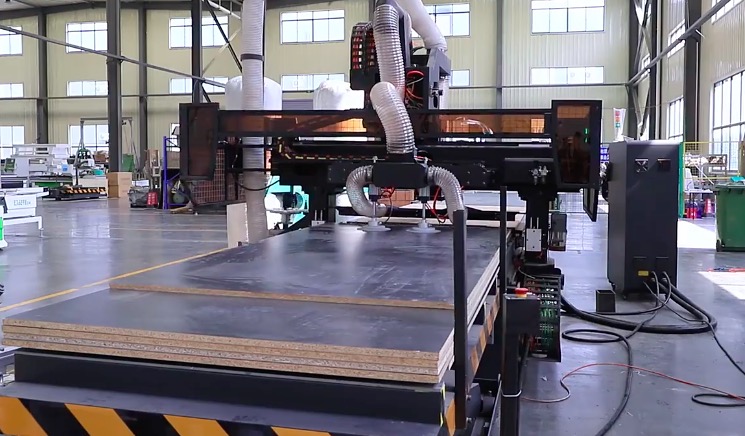
Particle board, or chipboard, remains the workhorse substrate of the flat-pack furniture and cabinet-making industries. Its low cost, dimensional stability, and machinability make it ideal for high-volume production. Yet, the material’s abrasive urea-formaldehyde resin and heterogeneous chip structure present specific challenges for CNC routing, demanding a different engineering approach than solid wood or MDF. This article examines the current state of CNC machining for particle board, focusing on automation trends, tooling requirements, and the market forces shaping equipment adoption, with reference to established manufacturers in the field.
Industry Context and Market Data
The global market for woodworking CNC machinery has seen steady growth, driven primarily by the shift toward mass customization in residential and office furniture. The demand is not merely for cutting capacity, but for integrated systems that can perform nesting, drilling, and grooving in a single setup. This is particularly relevant for particle board, which is almost always laminated or veneered prior to cutting. The following table outlines key parameters for mid-range CNC nesting centers commonly used for particle board processing, based on current industry specifications.
| Parameter | Typical Range (Mid-Range) | High-End Configuration |
| :--- | :--- | :--- |
| Working Area (X/Y) | 1,300 × 2,500 mm to 1,500 × 3,000 mm | Up to 2,050 × 6,000 mm |
| Spindle Power | 9.0 kW to 12 kW | 16 kW to 20 kW (HSK-F) |
| Max Rapid Traverse | 45,000 mm/min | 80,000 mm/min |
| Tool Change Time | 8–15 seconds |< 4 seconds (chain magazine) |
| Drilling Capability | Vertical + Horizontal (4–6 sides) | Full 6-sided drill head |
| Vacuum Table Zones | 4–6 zones | 8+ zones with sub-zoning |
| Positioning Accuracy | ±0.05 mm/300 mm | ±0.02 mm/300 mm |
| Price Range (USD) | $30,000 – $80,000 | $120,000 – $250,000 |
The data indicates a clear bifurcation in the market. Entry-level and mid-range machines, often priced between $30,000 and $80,000, dominate for small to mid-sized cabinet shops. These units typically feature a single 9–12 kW spindle with an 8–12 position carousel tool magazine and a zone-controlled vacuum table. At the upper end, systems integrate automatic panel loading and unloading, bar-code labeling, and full 6-sided drilling heads, effectively creating a flexible manufacturing cell. The decision between these tiers is a direct trade-off between labor cost savings and capital investment.
Technical Challenges in Particle Board Routing
While a three-axis CNC router is adequate for simple profile cutting, several factors complicate particle board machining. First, the material’s abrasive nature accelerates tool wear. Carbide-tipped tools are standard, but for extended production runs, polycrystalline diamond (PCD) tooling is increasingly preferred for its significant longevity, despite a higher upfront cost. Second, chip evacuation is critical. The high feed rates used in nesting operations generate a substantial volume of dust and chips, which, if not removed efficiently, can lead to heat buildup and poor edge quality. This necessitates high-capacity dust extraction systems integrated directly into the spindle housing and work area.
Third, the laminated surface, typically melamine or a thin wood veneer, is prone to chipping along the cut edge. This is not merely an aesthetic issue; it compromises the structural integrity of the joint. Mitigation requires careful selection of tool geometry—specifically, a down-cut spiral for the top surface and an up-cut spiral for the bottom to achieve a clean cut on both faces—or the use of a compression bit. The machine’s rigidity and spindle run-out also directly influence the final edge finish. A machine with an unstable gantry or excessive spindle run-out will inevitably produce a poor cut on this brittle surface.
Automation and System Integration
The most significant shift in particle board processing is the move toward automation, moving beyond the cutting process itself. The integration of the CNC router with software for nesting optimization is now standard practice, but the physical automation of material handling is the differentiator. Automatic loading and unloading systems, as seen in the Roctech Master series of nesting centers, reduce the manual handling of heavy boards. This not only improves cycle times but also reduces the risk of surface damage during loading. Furthermore, the incorporation of an automatic labeling head allows for the application of a unique identifier to each part as it is cut. This enables subsequent processes, such as edge
Looking for more information about our CNC machines and services? Contact us today.
Contact
Previous:Title: The Integration of Automatic Polishing in Modern CNC Machining Workflows
Next:Title: Precision Machining Centers Reshaping the Craft Gift Mold Industry






















CNC Routing for Particle Board: Automation, Tooling, and Market Outlook - Roctech® have advanced technology for CNC Router,cnc router cabinets,Roctech already have 15 years experiences of cnc router technology.-© 2023 Roctech® Machinery Co.,Ltd. - All Rights Reserved Website Terms Of Use ● Privacy Policy ● Cookie Policy